
Vedanta Demerger 2026: The Ultimate Shareholder Guide to Tax, Cost Basis, and the "1:5" Split
Confused by the Vedanta demerger? While news sites focus on the stock price, we dive into what actually happens to your wallet. Learn how to calculate your new "Buy Price" for all 5 stocks, the hidden tax rules you must know, and why the "Residual Vedanta" entity might be the biggest dark horse in your portfolio.
TRENDINGINDIABUSINESS & FINANCE
12/27/20253 min read
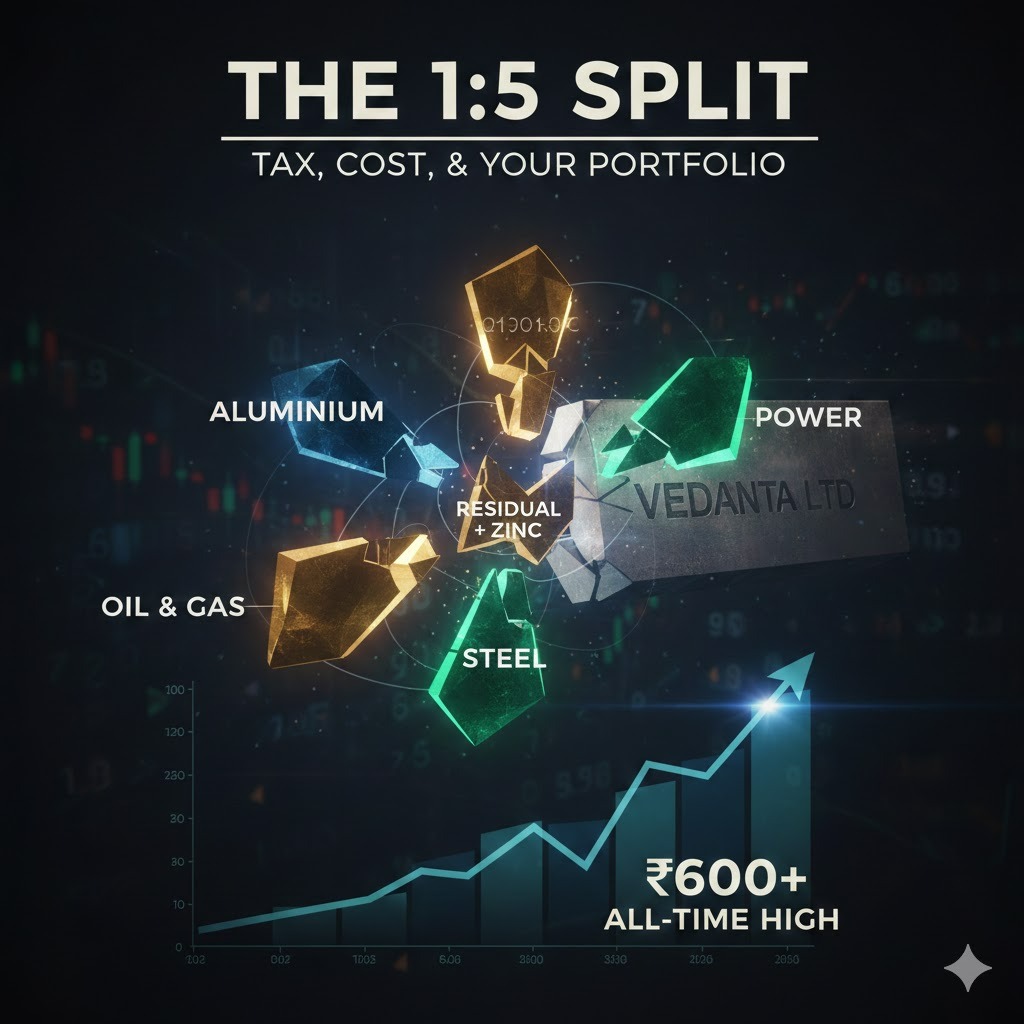
The Vedanta demerger has officially moved from "plan" to "reality" following the NCLT approval. As a shareholder, you are about to see your single holding of Vedanta Ltd (VEDL) transform into a mini-conglomerate of five separately listed companies.
But behind the excitement of "free shares" lies a complex financial puzzle. If you don't understand the Cost of Acquisition and Tax Implications, you could be in for a nasty surprise when you eventually decide to sell.
1. The "1:5" Mechanics: What You Get
For every 1 share of Vedanta Ltd you hold on the (yet to be announced) Record Date, you will receive 1 share in each of the four new entities:
Vedanta Aluminium: Global-scale aluminium production.
Vedanta Oil & Gas: The assets currently under Cairn India.
Vedanta Power: Focused on energy and commercial power.
Vedanta Steel & Ferrous Materials: Iron ore and steel businesses.
Crucially, you will also continue to hold your 1 share of the "Original" Vedanta Ltd (which will focus on Zinc, Display Glass, and Semiconductors). In total, you start with one stock and end up with five.
2. The Tax Secret: Is this a "Taxable Event"?
The short answer is No. Under Section 47(vid) of the Indian Income Tax Act, the receipt of shares during a demerger is tax-neutral. You do not owe any tax the day the new shares land in your Demat account.
The Strategy: The tax "clock" doesn't reset. Your Date of Acquisition for the four new stocks will be the same date you originally bought your Vedanta Ltd shares. This is excellent news for Long-Term Capital Gains (LTCG) benefits!
3. The "Cost of Acquisition" Breakdown
This is the most critical part for your future tax filings. When you sell one of these new stocks, you need to know what you "paid" for it. Since you didn't buy them individually, your original Vedanta buy price is split based on the Net Book Value (NBV) of the assets.
Estimated Cost Splitting (Pro-Forma): To give you an idea of the math, if you originally bought Vedanta at ₹500 per share, your "Buy Price" will likely be distributed as follows:
Vedanta Aluminium (45% Weightage): Your new cost basis would be ₹225.00.
Vedanta Oil & Gas (22% Weightage): Your new cost basis would be ₹110.00.
Vedanta Ltd - Residual (18% Weightage): Your new cost basis would be ₹90.00.
Vedanta Power (8% Weightage): Your new cost basis would be ₹40.00.
Vedanta Iron & Steel (7% Weightage): Your new cost basis would be ₹35.00.
(Note: Official ratios will be released by the company post-demerger; these percentages are estimates based on current asset contributions.)
4. Why "Residual Vedanta" is the Hidden Gem
While the market is chasing the new "Pure Play" stocks, savvy investors are looking at the parent company.
The Hindustan Zinc Factor: The residual Vedanta Ltd will still own nearly 65% of Hindustan Zinc (HZL).
The Arbitrage Opportunity: Often, holding companies trade at a discount. If the parent company’s stock price ends up being lower than the value of its stake in HZL, it represents a massive "buy" signal for value investors.
5. Action Plan for Shareholders
Check your "Average Price": Log into your broker app and note your current average buy price for VEDL today.
Watch the "Ex-Date": You must own the shares before the Ex-Date to be eligible for the new shares. If you buy on or after the Ex-Date, you only get the parent company.
Hold for the Long Term: Demergers often cause "forced selling" by mutual funds that cannot hold certain sectors. This can create a temporary dip—which is often a buying opportunity.
Final Verdict: The Vedanta demerger is a rare value-unlocking event. By turning one "heavy" stock into five "lean" businesses, the company is making it easier for the market to price each sector fairly. Just make sure your tax math is ready before the split happens!