
Khaleda Zia’s Legacy and the Changing Face of Bangladesh in 2026
Following the passing of Khaleda Zia, Bangladesh’s first female Prime Minister, we look at her historic "Battle of the Begums" rivalry, her impact on democracy, and what her departure means for the upcoming 2026 national elections.
INTERNATIONALTRENDING
12/31/20251 min read
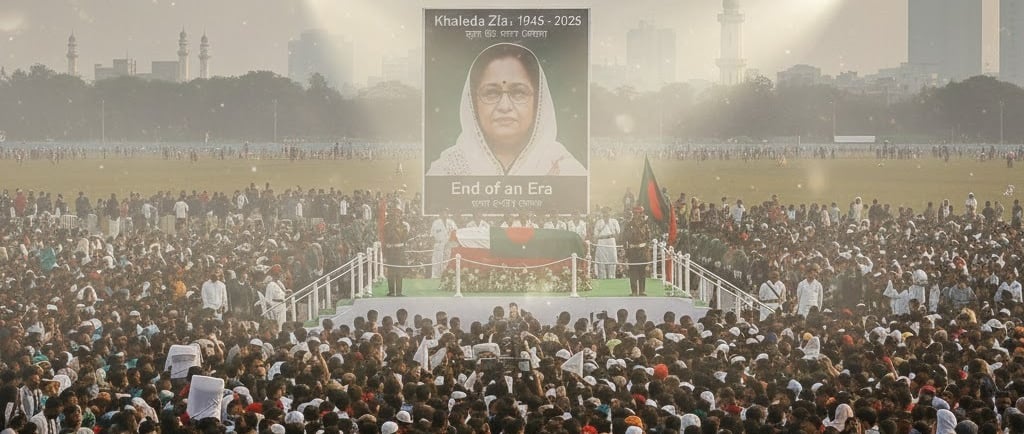

The passing of Begum Khaleda Zia on December 30, 2025, has sent shockwaves through the political landscape of South Asia. At 80 years old, the Chairperson of the Bangladesh Nationalist Party (BNP) and three-time Prime Minister leaves behind a legacy defined by resilience, controversy, and an uncompromising stance against autocracy.
Khaleda Zia’s journey from a homemaker to the most powerful woman in Bangladesh is the stuff of political legend. Entering the arena after the 1981 assassination of her husband, President Ziaur Rahman, she quickly became a symbol of the democratic movement. Her career was famously defined by her decades-long rivalry with Sheikh Hasina—a relationship often referred to as the "Battle of the Begums" that dictated the country’s alternating path of governance for thirty years.
While her later years were marked by house arrest and declining health, her release following the mass uprising in August 2024 sparked a renewed hope among her millions of supporters. Even in her final months, she remained a central figure, with her party filing nomination papers in her name just days before her passing.
However, as Bangladesh observes three days of national mourning, the focus is already shifting to the future. With the general elections scheduled for February 12, 2026, the BNP now finds itself under the leadership of her son, Tarique Rahman. His recent return from 17 years of exile signals a major pivot for the party.
The death of Khaleda Zia is more than just a loss of a leader; it is the closing of a chapter on the "old guard" of Bangladeshi politics. As the nation prepares for its first vote since the fall of the previous regime, the world is watching to see if her vision of a "multi-party democratic culture" will finally stabilize or if a new era of uncertainty begins.
For the people of Bangladesh, 2026 will not just be about a new year—it will be about defining a new national identity without the presence of the woman who helped shape it for nearly half a century.