
Arjun Tendulkar Is Trending Again: What Actually Happened in the Match & Why the Internet Reacted So Strongly
Arjun Tendulkar is trending across Google and social media once again. But what really happened in the match, and why did the internet react so intensely? This blog breaks down the event, the reactions, and the bigger reason behind the recurring hype — beyond just cricket scores.
SPORTSTRENDINGINDIA
12/31/20252 min read
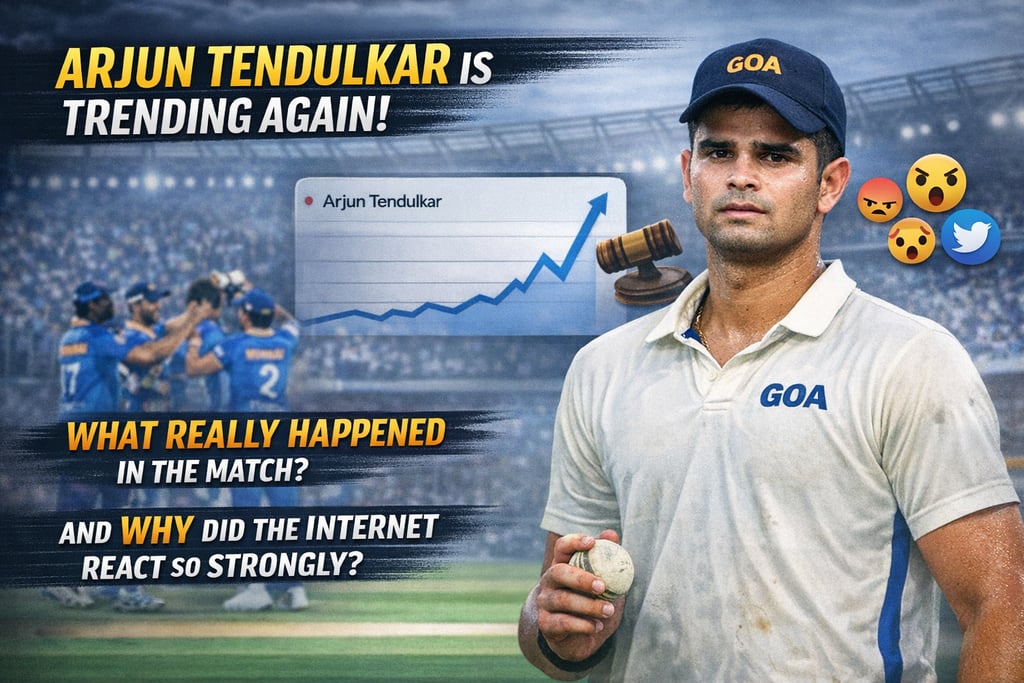
If you’ve opened Google Trends or scrolled through social media today, you’ve probably noticed one name popping up repeatedly: Arjun Tendulkar.
The immediate question most people are asking is simple — what happened?
The more important question, however, is — why does the reaction always seem bigger than the event itself?
Let’s break this down clearly.
What Actually Happened in the Match
Arjun Tendulkar recently featured in a domestic cricket fixture that quickly caught public attention. While the match itself had multiple standout performances, his outing became one of the most discussed moments of the game.
From a purely cricketing perspective, it was not an extraordinary performance, either positively or negatively. Similar or even more impactful performances occur regularly in domestic cricket without attracting nationwide attention.
Yet, within hours:
His name started trending on Google
Social media platforms filled with debates, criticism, and defense
News portals rushed to publish updates, opinions, and reactions
So why did this moment explode online?
Why Arjun Tendulkar Trends So Easily
The answer lies beyond the scorecard.
Arjun Tendulkar exists at the intersection of sport, legacy, and public expectation. Being the son of one of cricket’s greatest legends means every appearance is watched through a magnifying glass.
For many fans:
Every performance is compared to an impossible benchmark
Every average outing is treated as a verdict
Every match becomes a referendum on “deserving vs privilege”
This combination creates a perfect environment for online spikes.
The Internet Doesn’t React to Performance — It Reacts to Narrative
Modern digital platforms don’t reward nuance.
They reward emotion, debate, and familiarity.
Arjun Tendulkar’s name carries:
Emotional weight
A recognizable surname
A built-in storyline people already care about
That makes his performances algorithm-friendly.
Even neutral or average moments generate:
Strong opinions
Polarized reactions
High engagement
And engagement is exactly what pushes topics into trending territory.
Why Similar Performances Go Unnoticed
Here’s an uncomfortable truth.
Every week, domestic cricket produces:
Better bowling spells
More impactful batting knocks
Match-winning performances
Most of those players never trend.
Not because they lack talent — but because they lack narrative familiarity.
In today’s attention economy:
Visibility often precedes merit
Recognition fuels reach
Reach amplifies reaction
Arjun Tendulkar’s trend is less about cricket alone and more about how audiences consume stories.
What This Trend Really Says About Us
This recurring pattern says more about audience behavior than about any single player.
It highlights:
Our obsession with legacy
Our discomfort with privilege
Our tendency to turn individuals into symbols
Every time Arjun Tendulkar trends, it reopens debates about fairness, opportunity, and expectations — debates that extend far beyond the boundary ropes.
The Bigger Picture
Arjun Tendulkar is still early in his professional journey. Like many domestic cricketers, his career will be defined over time, not by trending moments.
But as long as:
Surnames influence attention
Algorithms reward controversy
Audiences seek familiar names
His appearances will continue to spark disproportionate reactions online.
Final Thought
The next time you see “Arjun Tendulkar trending”, pause for a moment.
Ask not just what happened in the match —
but why this moment captured the internet’s attention at all.
Because in today’s digital world, attention is rarely accidental.